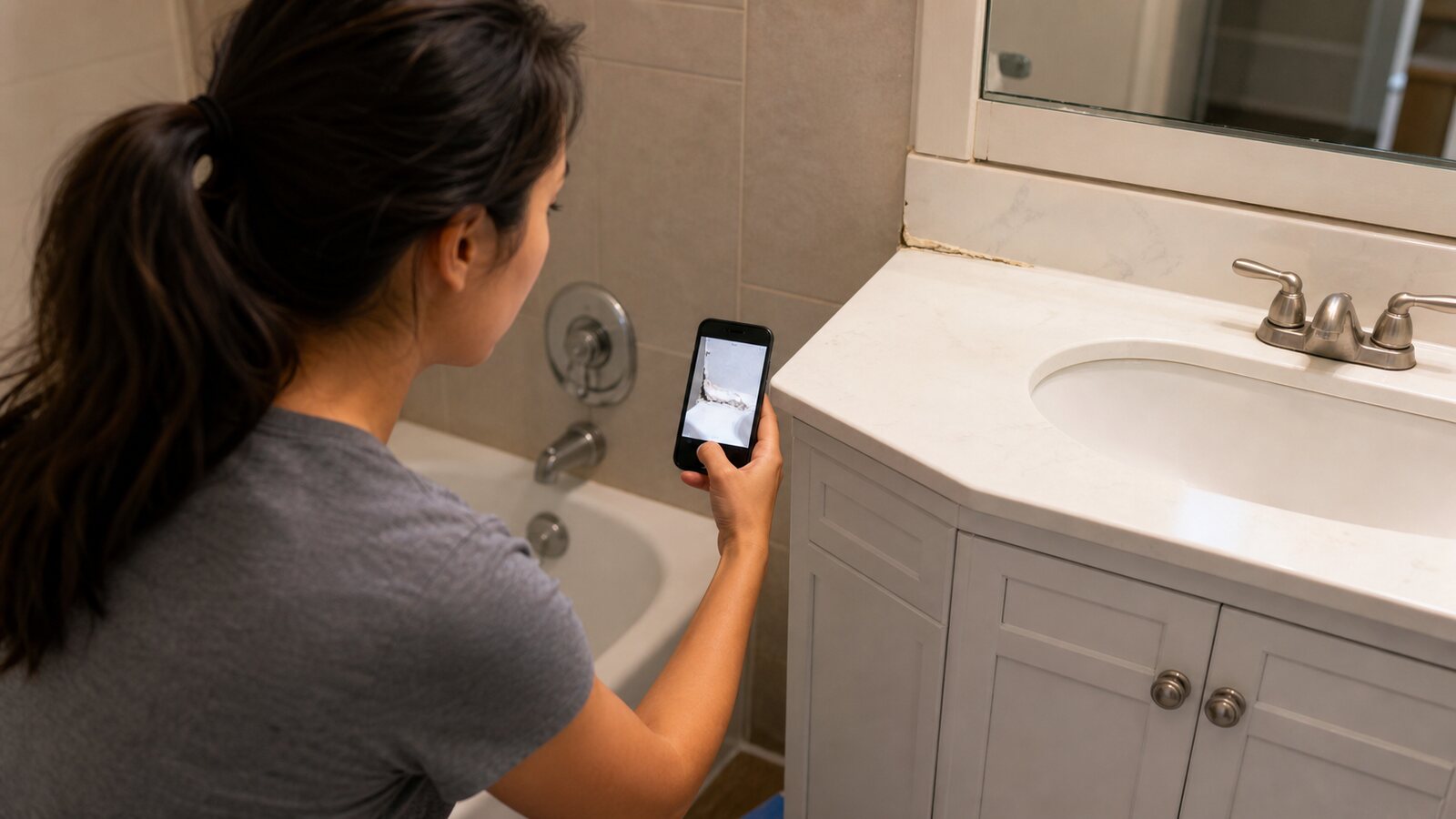
A renter-focused inspection guide for documenting apartment condition before disputes start.
Renters need their own copy
An apartment inspection checklist for renters should live with the renter, not only in the leasing office. Even if your landlord provides a form, keep your own dated copy with photos and notes.
Your copy should be easy to find at move-out. A forgotten paper form in a drawer is not much help when you are trying to answer an itemized deduction letter.
Photograph normal-looking rooms too
It is natural to photograph only damage, but renters should also capture rooms that look clean and undamaged. If a room later becomes part of a dispute, wide photos from move-in help show the original condition.
For every room, take a doorway photo, a reverse-angle photo, and close-ups of any issue. This simple habit creates enough context without turning the inspection into an all-day project.
Watch for small things that become deductions
Common apartment issues include mini-blind damage, missing screens, chipped counters, loose towel bars, stained carpet, scratched vinyl, nail holes, dirty oven interiors, cracked refrigerator drawers, and old water stains.
Write them down even if they seem minor. You are not asking for everything to be fixed; you are recording that the condition existed before your tenancy.
Use the checklist as a communication tool
After completing the inspection, send a polite message with the report attached or linked. Keep the message short: you are sharing move-in condition for everyone’s records.
TenantCircle can generate a shareable record from your inspection, but the principle is the same with any tool: document clearly, send early, and keep proof that you sent it.
How to use this guide without overthinking it
Do the inspection in one pass, in daylight if possible, and keep your pace steady. Open the room, take the wide photos first, then move around the walls, fixtures, closets, flooring, windows, doors, and built-ins. If you see something that might matter later, document it in the moment instead of trying to decide whether it is “serious enough.” Small details are easier to ignore later than they are to recreate.
After you finish the apartment inspection checklist for renters, take ten minutes to review the record before sending it. Make sure every photo belongs to a room, every issue has a short location note, and the inspection date is obvious. Then share a copy with your landlord or property manager and keep proof that you sent it. This is the simple habit that turns a checklist into a useful security deposit record.
Apartment inspection checklist for renters: quick checklist
- Keep your own dated copy of the inspection.
- Photograph undamaged rooms as well as damaged areas.
- Document small issues before they become move-out deductions.
- Send the record politely and early.
- Store the inspection somewhere accessible until after move-out.
FAQ
Why do renters need an apartment inspection checklist?
It helps renters document pre-existing condition and keep a record that can be used if deposit deductions are disputed later.
Should I use my landlord’s form or my own?
Use the landlord’s form if provided, but keep your own copy with photos and notes.
What photos should renters take?
Take wide room photos, close-ups of issues, and photos of appliances, plumbing areas, flooring, walls, windows, and doors.
Is a video walkthrough better than photos?
Video can help, but photos with room-specific notes are easier to organize and reference later.
Keep the record organized
Whether you use TenantCircle or your own folder system, the habit is the same: inspect early, organize by room, save the photos, and share a dated report while the condition is still fresh.
Request access