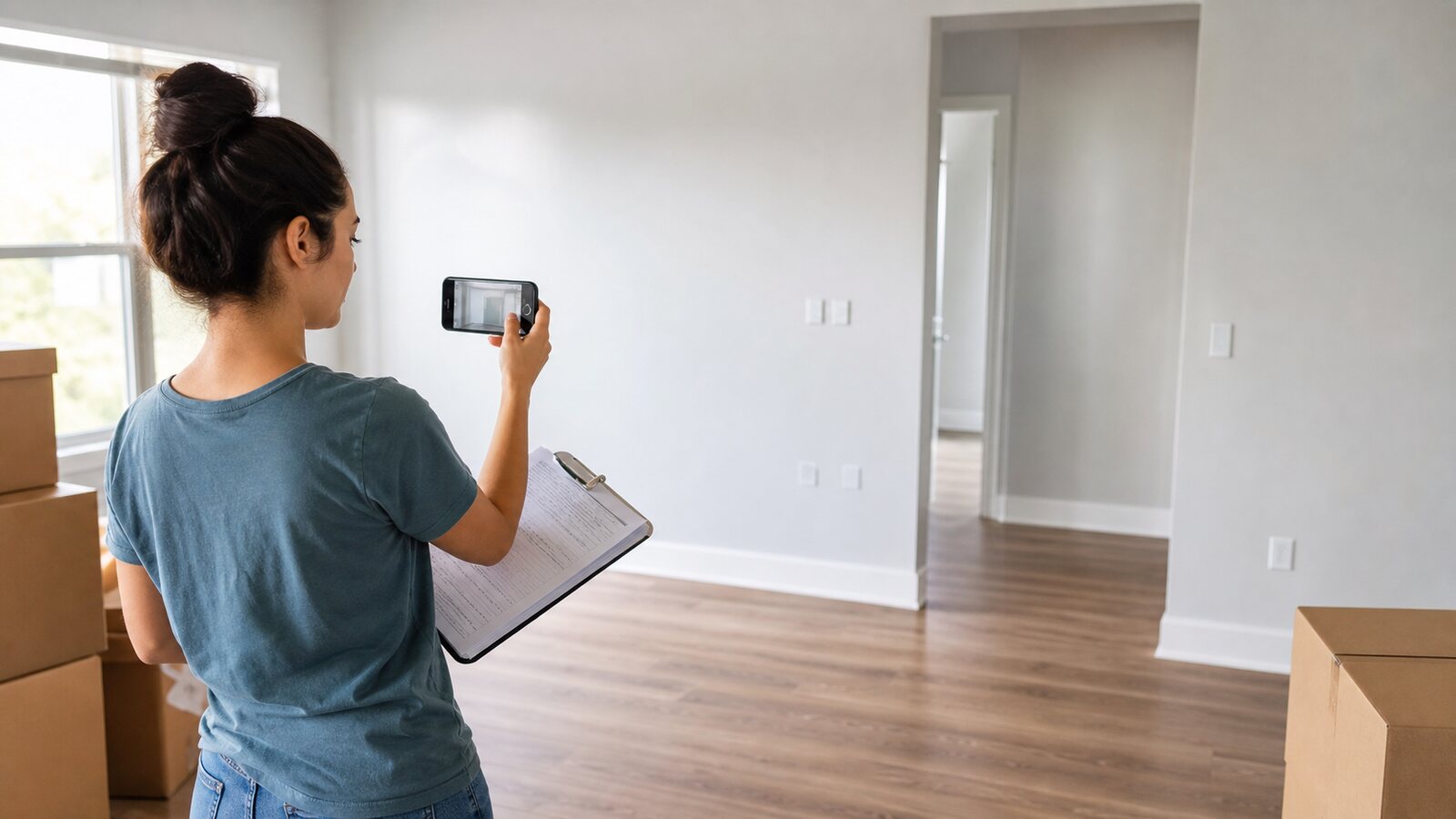
Use this room-by-room move-in inspection checklist before boxes and furniture cover the evidence.
Free printable move-in checklist
Download TenantCircle’s room-by-room PDF before your walkthrough, then keep it with your lease records.
Get the free checklistStart before the place feels like home
The best time to document a rental is before your couch, rugs, lamps, and storage bins make everything harder to see. A move-in inspection checklist gives you a calm way to walk through the property and record what was already there on day one.
This does not need to be hostile or dramatic. Think of it as creating a shared memory. Paint chips, loose handles, slow drains, missing screens, stained carpet, and cracked tile are much easier to discuss when you have dated photos and organized notes from the beginning.
What to capture in every room
For each room, take one wide photo from the doorway, one photo from the opposite corner, and close-ups of anything damaged or unusual. Then write short notes using plain language: “scratch on left closet door,” “water stain under sink,” or “small nail holes on east wall.”
Do not rely only on close-up photos. Close-ups are useful, but they can be hard to place later. Wide room photos give context, and context is what makes your inspection easier to understand if a security deposit question comes up months later.
Room-by-room checklist
Start with the entry, living room, kitchen, bathrooms, bedrooms, closets, laundry area, balcony, garage, and exterior areas you are responsible for maintaining. In each space, check walls, floors, ceilings, doors, windows, lights, outlets, appliances, fixtures, smoke detectors, and visible plumbing.
In kitchens and bathrooms, spend extra time under sinks and around water lines. Small leaks, swollen cabinet bottoms, loose caulk, and stained grout are common sources of later disagreement. If something is dirty rather than damaged, document that too.
Send a copy early
After the walkthrough, send the inspection to your landlord or property manager as soon as possible. A same-day or next-day record is stronger than a folder of photos that never left your phone. Keep a copy of the email, message, or share link.
TenantCircle can help here by organizing photos by room, preserving timestamped evidence, and generating a clean report you can share. The important habit is simple: document first, then move in.
How to use this guide without overthinking it
Do the inspection in one pass, in daylight if possible, and keep your pace steady. Open the room, take the wide photos first, then move around the walls, fixtures, closets, flooring, windows, doors, and built-ins. If you see something that might matter later, document it in the moment instead of trying to decide whether it is “serious enough.” Small details are easier to ignore later than they are to recreate.
After you finish the move in inspection checklist, take ten minutes to review the record before sending it. Make sure every photo belongs to a room, every issue has a short location note, and the inspection date is obvious. Then share a copy with your landlord or property manager and keep proof that you sent it. This is the simple habit that turns a checklist into a useful security deposit record.
Move in inspection checklist: quick checklist
- Photograph every room before unpacking.
- Take wide shots plus close-ups of damage.
- Document walls, floors, ceilings, windows, doors, appliances, fixtures, and plumbing.
- Write short notes that explain where each issue is located.
- Send the finished record to your landlord or manager.
FAQ
When should I complete a move-in inspection?
Complete it before unpacking, ideally the same day you receive access to the rental. The earlier the record is created, the easier it is to show the condition existed before you lived there.
Should renters take photos during a move-in inspection?
Yes. Photos are one of the most useful parts of a move-in inspection, especially when they are organized by room and paired with short written notes.
Do I need my landlord to sign the move-in checklist?
A landlord signature is helpful, but you should still document the property and send a dated copy even if they do not sign it.
What if I find damage after moving in?
Document it immediately, note when you discovered it, and send the update to your landlord or property manager as soon as possible.
Sources
- Top 10 Tips Every Renter Should Know - U.S. Department of Housing and Urban Development
- A Brief Guide to Mold, Moisture and Your Home - U.S. Environmental Protection Agency
- CO Alarms - U.S. Consumer Product Safety Commission
Turn the walkthrough into an organized report
TenantCircle keeps room notes, photos, dates, and signatures together so the record is easier to review and share while the condition is still fresh.
View on the App Store See how the renter app works