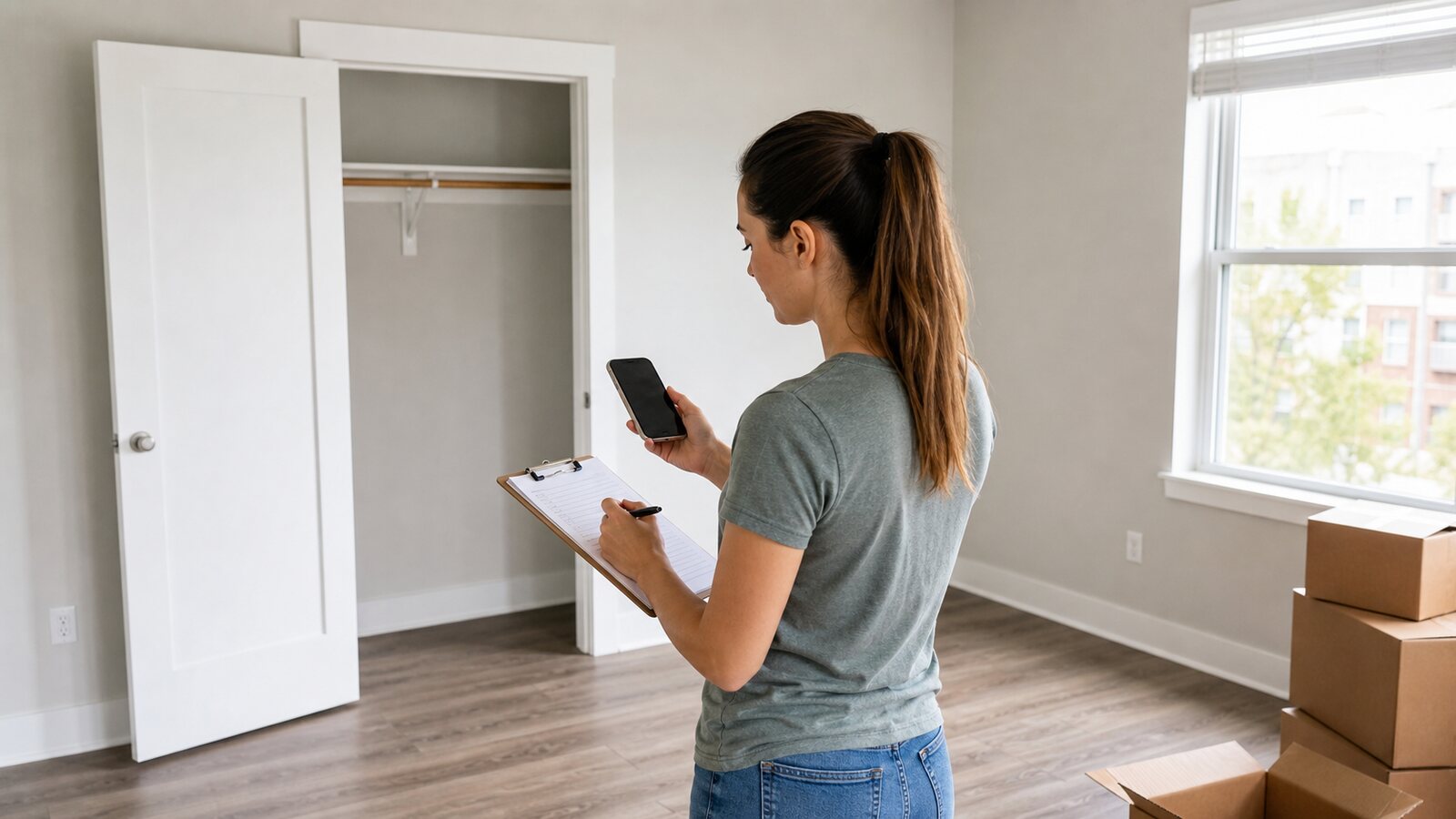
A tenant-friendly checklist for documenting condition before your lease really begins.
Your inspection is your baseline
A move-in inspection checklist for tenants is not just paperwork. It is the baseline that separates pre-existing condition from damage that happens during your lease. Without that baseline, everyone is left relying on memory, and memory is a poor record after a year of normal living.
The goal is not to accuse anyone. The goal is to be specific. A good tenant inspection says what you saw, where you saw it, and when you documented it.
Inspect like you are explaining it to someone later
Walk slowly and document each room in the same order. Start with a wide photo, then capture walls, flooring, doors, windows, lights, outlets, and built-ins. If something is stained, cracked, loose, missing, dented, scratched, or not working, add a close-up photo and a short note.
Avoid vague notes like “bad wall.” Use notes like “three scuffs below living room window” or “paint chip behind bedroom door handle.” Specific notes make your report easier for a landlord, mediator, or small claims clerk to understand.
Test ordinary things
Turn on faucets, flush toilets, run the garbage disposal, test burners, open windows, lock doors, check closet tracks, and flip light switches. Tenants often photograph visible damage but forget to test basic function. A broken outlet or stuck window can matter just as much as a cracked tile.
If you cannot test something safely, document that too. For example, if a window is painted shut or an appliance is not connected, write exactly that. Your inspection should show what you could verify and what you could not.
Keep the tone neutral
A strong tenant inspection is factual, not emotional. Instead of writing “the landlord left this filthy,” write “grease residue inside oven and crumbs in lower drawer.” Neutral wording makes the report more credible and easier to share.
TenantCircle is built around that kind of record: room, condition, note, photo, timestamp, and report. Whether you use the app or your own system, consistency is what makes the documentation useful.
How to use this guide without overthinking it
Do the inspection in one pass, in daylight if possible, and keep your pace steady. Open the room, take the wide photos first, then move around the walls, fixtures, closets, flooring, windows, doors, and built-ins. If you see something that might matter later, document it in the moment instead of trying to decide whether it is “serious enough.” Small details are easier to ignore later than they are to recreate.
After you finish the move in inspection checklist for tenant, take ten minutes to review the record before sending it. Make sure every photo belongs to a room, every issue has a short location note, and the inspection date is obvious. Then share a copy with your landlord or property manager and keep proof that you sent it. This is the simple habit that turns a checklist into a useful security deposit record.
Move in inspection checklist for tenant: quick checklist
- Create one record per room.
- Use neutral descriptions for damage and cleanliness issues.
- Test doors, locks, windows, lights, outlets, faucets, toilets, and appliances.
- Send the finished inspection before or shortly after moving in.
- Save the report somewhere you can find at move-out.
FAQ
What should a tenant include in a move-in inspection?
Include room photos, close-ups of damage, notes about condition, appliance/function tests, and the date the inspection was completed.
Can tenants make their own move-in inspection checklist?
Yes. If your landlord does not provide a checklist, you can create your own and send it to them as a dated record.
How detailed should the checklist be?
Detailed enough that someone who was not there can understand the location and condition of each issue.
Should I include small scratches and nail holes?
Yes. Small issues can become disputed later, so it is better to document them at move-in.
Keep the record organized
Whether you use TenantCircle or your own folder system, the habit is the same: inspect early, organize by room, save the photos, and share a dated report while the condition is still fresh.
Request access