Use this checklist before returning keys so your move-out record is organized and fair.
Move-out is not just cleaning day
A move-out inspection checklist helps you separate ordinary wear, cleaning tasks, and actual damage before you hand over the keys. The last week of a lease is busy, so a checklist keeps you from missing the small details that can become expensive deductions.
If you created a move-in record, start there. Compare each room against the original photos. Your goal is to show what changed, what stayed the same, and what was already documented when you moved in.
Photograph after furniture is gone
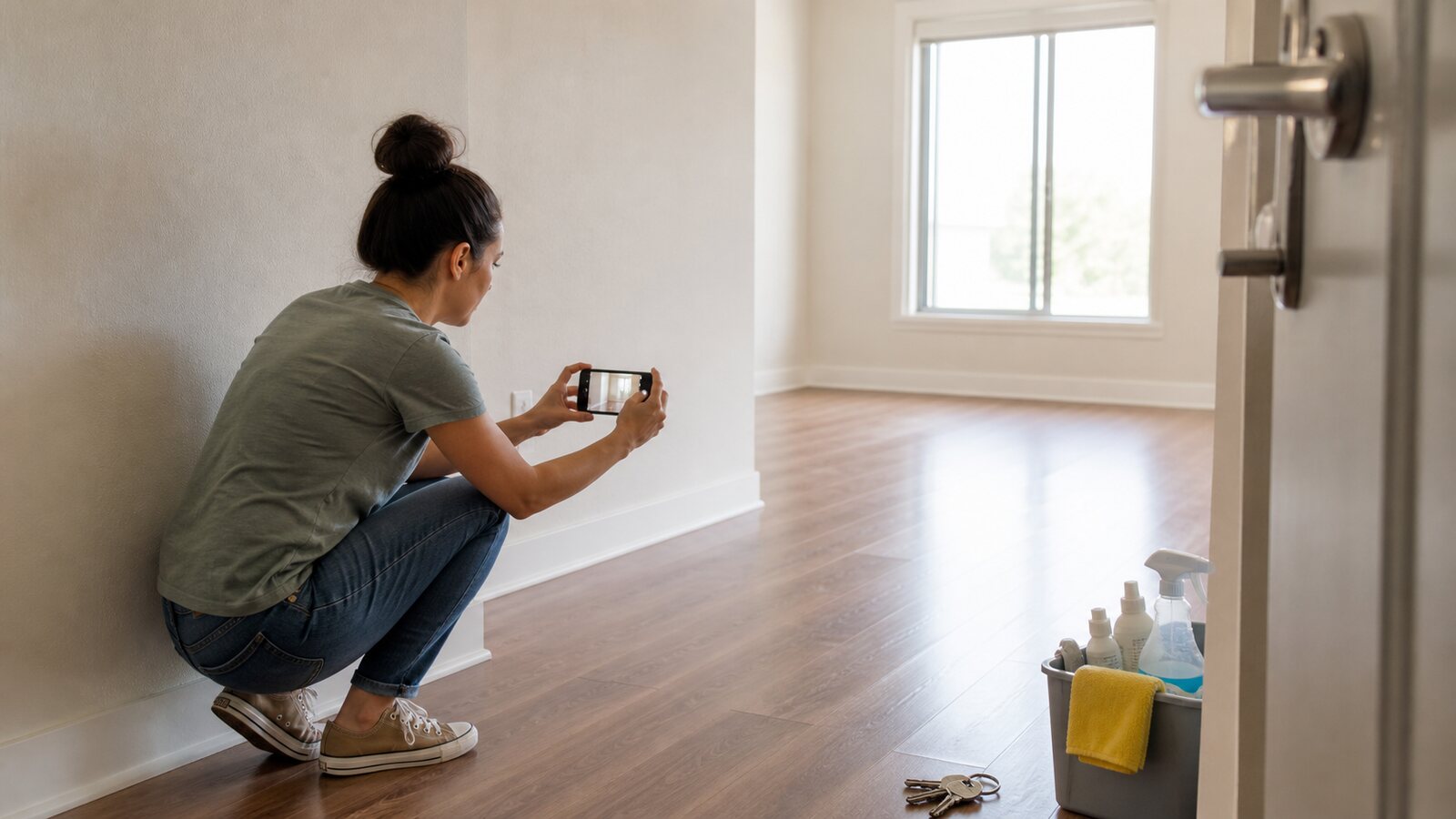
Take move-out photos after your furniture and boxes are removed but before you give up access. Get wide shots from each corner and close-ups of cleaned appliances, floors, walls, bathrooms, and any repairs you made.
Do not skip areas that look fine. A complete record is more useful than a few photos of problem spots. If a landlord later points to a wall, floor, or fixture, you want your report to show that area clearly.
Use your move-in inspection as the comparison
The most persuasive move-out documentation is not just “here is what it looked like when I left.” It is “here is what it looked like when I arrived, and here is what it looked like when I left.” That comparison helps clarify responsibility.
TenantCircle is designed for this paired workflow. A renter can create a move-in inspection, then use it later as the structure for move-out documentation instead of starting from a blank page.
Ask for the final walkthrough in writing
If your landlord offers a final walkthrough, request it in writing and keep the response. If they identify issues, ask for specifics and document any corrections you make before the deadline.
Rules vary by state, so this guide is not legal advice. But as a practical matter, dated photos, repair receipts, cleaning receipts, and a clear move-out report can make the deposit conversation much easier.
How to use this guide without overthinking it
Do the inspection in one pass, in daylight if possible, and keep your pace steady. Open the room, take the wide photos first, then move around the walls, fixtures, closets, flooring, windows, doors, and built-ins. If you see something that might matter later, document it in the moment instead of trying to decide whether it is “serious enough.” Small details are easier to ignore later than they are to recreate.
After you finish the move out inspection checklist, take ten minutes to review the record before sending it. Make sure every photo belongs to a room, every issue has a short location note, and the inspection date is obvious. Then share a copy with your landlord or property manager and keep proof that you sent it. This is the simple habit that turns a checklist into a useful security deposit record.
Move out inspection checklist: quick checklist
- Remove furniture before taking final photos.
- Compare every room against move-in documentation.
- Photograph cleaned appliances, bathrooms, floors, walls, and windows.
- Save receipts for cleaning or repairs.
- Request walkthrough details in writing.
FAQ
When should I do a move-out inspection?
Do it after your belongings are removed and cleaning is complete, but before you return keys or lose access.
Should I take move-out photos?
Yes. Take wide shots and close-ups so you have a dated record of the property condition when you left.
What if I forgot to do a move-in inspection?
Still complete a move-out inspection. It may not prove original condition, but it can document how you returned the property.
Should I attend the landlord walkthrough?
If available, yes. Ask for issues in writing and document any corrections you make.
Turn the walkthrough into an organized report
TenantCircle keeps room notes, photos, dates, and signatures together so the record is easier to review and share while the condition is still fresh.
View on the App Store See how the renter app works