A tenant-first guide to documenting your rental before the final walkthrough.
Think like the person reviewing the deposit
A move-out inspection checklist for tenants should answer one question: what condition did you leave the rental in? The clearer your answer, the easier it is to respond if deductions appear later.
Tenants often focus only on cleaning, but documentation matters too. You need proof of clean rooms, working fixtures, returned keys, completed repairs, and the absence of damage beyond normal wear.
Document clean and working condition
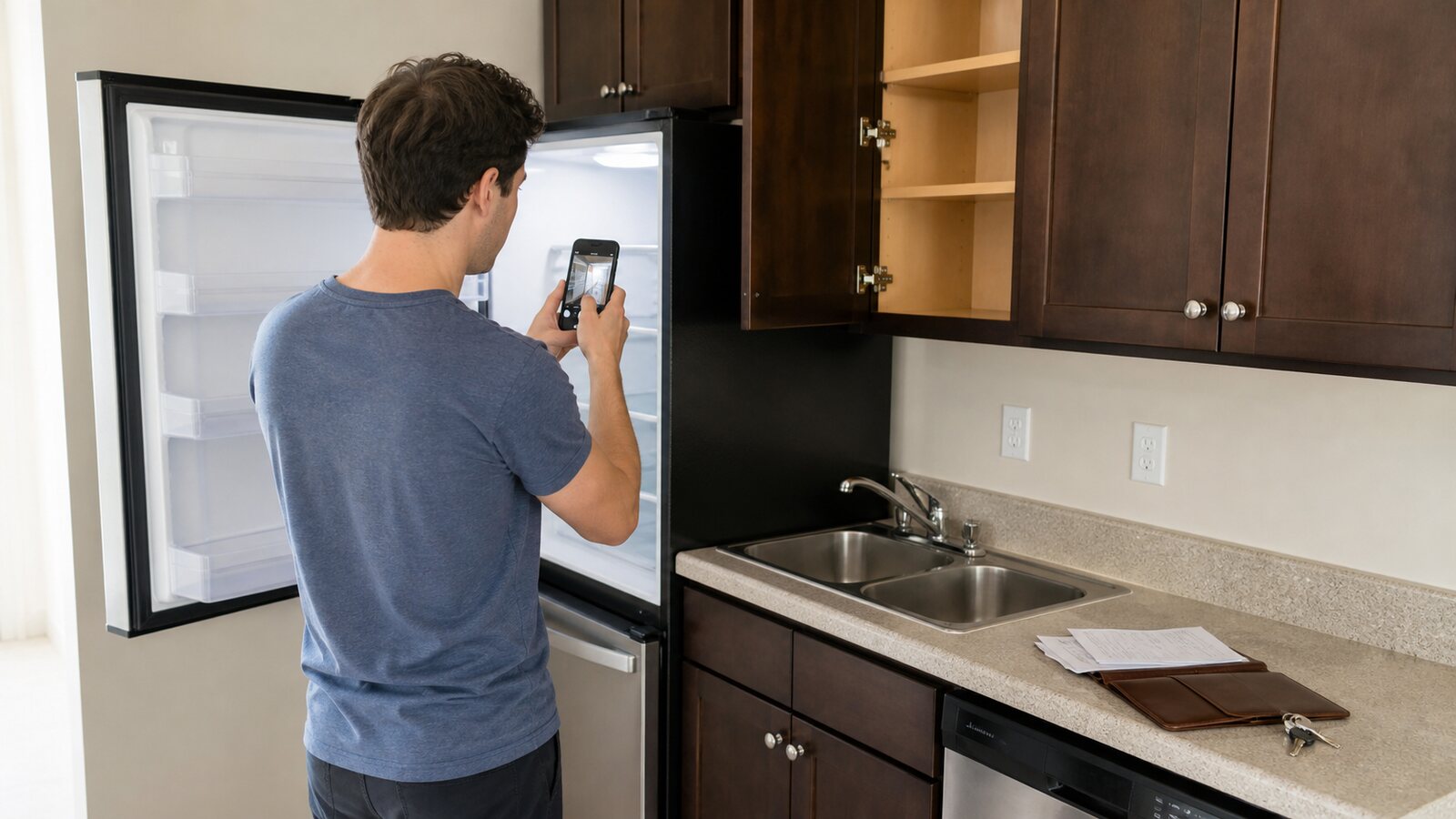
Photograph the inside of the oven, refrigerator, cabinets, drawers, sinks, tubs, toilets, closets, and laundry area. Show that trash was removed and personal belongings are gone. If you paid for professional cleaning or carpet cleaning, save the receipt.
Also test locks, windows, light fixtures, ceiling fans, outlets, smoke detectors where practical, and appliance function. If something was already broken at move-in, include the original move-in note or photo in your comparison.
Repair what you can document honestly
Patch small holes if your lease requires it, replace missing bulbs, clean scuffs, and remove adhesive strips carefully. Photograph the completed work. Do not hide serious damage or create a misleading record; that can backfire quickly.
The point of documentation is not to pretend the rental is perfect. It is to create a fair record of what happened, what you fixed, and what was already present.
Create one final package
Before leaving, collect your move-in report, move-out report, cleaning receipts, repair receipts, forwarding address, and key return confirmation. A single organized package is easier to reference than scattered texts and photos.
This is where a tool like TenantCircle helps without needing to be the center of the story. The app keeps rooms, photos, notes, and reports together so you are not sorting through a camera roll after the deposit deadline starts.
How to use this guide without overthinking it
Do the inspection in one pass, in daylight if possible, and keep your pace steady. Open the room, take the wide photos first, then move around the walls, fixtures, closets, flooring, windows, doors, and built-ins. If you see something that might matter later, document it in the moment instead of trying to decide whether it is “serious enough.” Small details are easier to ignore later than they are to recreate.
After you finish the move out inspection checklist for tenant, take ten minutes to review the record before sending it. Make sure every photo belongs to a room, every issue has a short location note, and the inspection date is obvious. Then share a copy with your landlord or property manager and keep proof that you sent it. This is the simple habit that turns a checklist into a useful security deposit record.
Move out inspection checklist for tenant: quick checklist
- Take final photos after cleaning and repairs.
- Document inside appliances, cabinets, closets, and bathrooms.
- Save cleaning and repair receipts.
- Compare move-out condition with move-in records.
- Keep proof of key return and forwarding address delivery.
FAQ
What should tenants photograph at move-out?
Photograph every room, inside appliances and cabinets, bathrooms, floors, walls, windows, doors, and any repairs or cleaned areas.
Should I hire a cleaner before move-out?
That depends on your lease and the property condition. If you do, save the receipt and photograph the cleaned areas.
Can a tenant dispute move-out deductions?
Tenants can often dispute deductions, especially when they have photos, receipts, and move-in documentation. Rules vary by state.
How long should I keep move-out records?
Keep them at least until the deposit is fully resolved, and longer if there is a dispute or state deadline involved.
Keep the record organized
Whether you use TenantCircle or your own folder system, the habit is the same: inspect early, organize by room, save the photos, and share a dated report while the condition is still fresh.
Request access