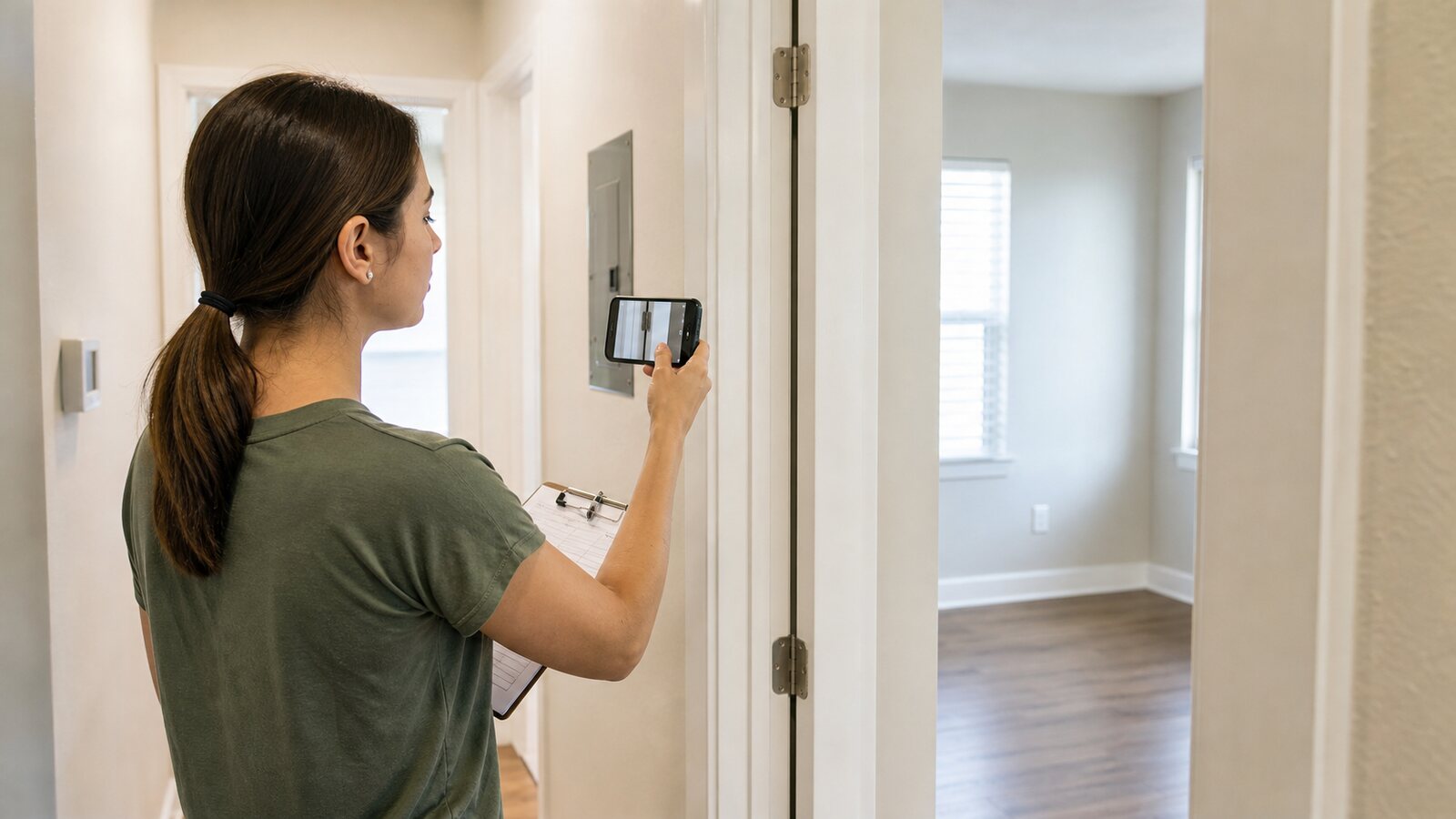
A comprehensive rental inspection checklist helps landlords, property managers, and tenants document move-in, move-out, and routine walk-through condition clearly.
Free printable move-in checklist
Download TenantCircle’s room-by-room PDF before your walkthrough, then keep it with your lease records.
Get the free checklistWhy You Need a Rental Inspection Checklist
Whether you are a property manager, landlord, or tenant, rental inspections are essential to protecting the property and creating a clear record of condition. Move-in, move-out, and routine walk-through inspections all help reduce confusion when repairs, deposits, or maintenance questions come up later.
Using a rental inspection checklist template, whether for move-in, move-out, or routine inspections, protects both landlords and tenants. A checklist ensures every important area is reviewed, captures pre-existing damage, and helps prevent disputes by keeping the process consistent.
The key is consistency. The same checklist structure should be used across inspections so condition can be compared fairly over time.
Best Practices for Rental Inspections
A rental inspection checklist is most useful when it is paired with a repeatable process. These best practices help make the inspection easier to complete and more useful if questions arise later.
1. Always Use Visual Documentation
Do not rely solely on written notes. Photos and videos provide objective evidence of the property condition at the time of inspection.
Take wide photos for room context and close-ups for damage, wear, cleanliness issues, appliances, fixtures, and areas that may need repair.
2. Conduct Both Move-In & Move-Out Inspections
A move-in inspection creates the baseline for the lease. A move-out inspection compares the property against that original record.
Using the same checklist at both points makes it easier to distinguish pre-existing condition, normal wear, and tenant-caused damage.
3. Perform Regular Walk-Through Inspections
Do not limit inspections to the beginning and end of the lease. Routine walk-through inspections can help identify maintenance issues before they become expensive repairs.
Many property teams request inspections every six to twelve months, depending on lease terms, property needs, and local rules.
4. Get Signatures from Both Parties (Tenant & Property Manager)
Signatures help confirm that both parties reviewed the inspection record. They also make it easier to show when an inspection was completed and acknowledged.
If a signature is not available, keep proof that the report was delivered or shared, including the date and method of communication.
5. Use Digital Tools to Streamline Inspections
Digital inspection tools make it easier to collect photos, organize notes by room, and create a report that can be saved or shared.
TenantCircle helps keep inspection documentation organized so the final record is easier for tenants, landlords, and property managers to review.
Common Pitfalls to Avoid
Skipping minor details can create bigger disputes later. Small stains, cracked tiles, scratched flooring, loose hardware, and missing screens should be documented even if they do not seem urgent.
Not using photos is another common mistake. Written notes are helpful, but visual documentation gives the inspection record context and reduces disagreement over what was observed.
Do not forget exterior areas. Yards, driveways, fences, patios, windows, screens, roofs, and gutters can all affect the condition record.
The biggest pitfall is completing inspections inconsistently. A rental inspection checklist helps ensure the same areas are reviewed every time.
How Often Should Inspections Be Requested?
Inspection frequency depends on the property, lease terms, local law, and the reason for the inspection. At minimum, a clear move-in inspection and move-out inspection should be completed for each tenancy.
For occupied rentals, a routine walk-through every six to twelve months can help identify maintenance needs, safety concerns, and property condition changes before they become larger problems.
Free Rental Inspection Checklist (Printable & PDF)
A strong rental inspection checklist should cover both exterior and interior areas. Exterior areas may include the front yard, backyard, driveway, fences, pool or patio, windows, screens, roof, and gutters.
Interior areas should include the entryway, living room, kitchen, bathrooms, bedrooms, laundry room, hallways, and any additional rooms. In each room, review flooring, walls, ceilings, windows, blinds, electrical outlets, light fixtures, appliances, cabinets, sinks, faucets, and visible plumbing.
The checklist should also leave space for notes, photos, signatures, and follow-up items so the report is complete and easy to understand later.
Streamlining Your Rental Inspections
Using a rental inspection checklist ensures every inspection follows the same standard. That consistency helps protect landlords, property managers, and tenants by creating a clearer record of property condition.
TenantCircle makes inspections easier by helping renters and property teams organize room-by-room photos, notes, and reports in one place.
How to use this guide without overthinking it
Do the inspection in one pass, in daylight if possible, and keep your pace steady. Open the room, take the wide photos first, then move around the walls, fixtures, closets, flooring, windows, doors, and built-ins. If you see something that might matter later, document it in the moment instead of trying to decide whether it is “serious enough.” Small details are easier to ignore later than they are to recreate.
After you finish the rental inspection checklist, take ten minutes to review the record before sending it. Make sure every photo belongs to a room, every issue has a short location note, and the inspection date is obvious. Then share a copy with your landlord or property manager and keep proof that you sent it. This is the simple habit that turns a checklist into a useful security deposit record.
Rental inspection checklist: quick checklist
- Use the same checklist for move-in, move-out, and routine walk-through inspections.
- Photograph exterior areas, interior rooms, appliances, fixtures, flooring, walls, ceilings, windows, and doors.
- Record small details such as stains, scratches, loose hardware, missing screens, and cleanliness issues.
- Keep signatures, dates, notes, and photos tied to the final report.
- Schedule routine walk-through inspections every six to twelve months when lease terms and local rules allow.
FAQ
What is a rental inspection checklist?
It is a structured list used to document the condition of a rental property during move-in, move-out, or routine walk-through inspections.
Why are photos important during a rental inspection?
Photos and videos provide visual evidence that supports written notes and makes the inspection record easier to understand later.
How often should rental inspections happen?
Move-in and move-out inspections should happen for each tenancy. Many property teams also perform routine walk-throughs every six to twelve months, depending on lease terms and local rules.
What areas should a rental inspection checklist include?
Include exterior areas, entryways, living rooms, kitchens, bathrooms, bedrooms, laundry areas, hallways, appliances, fixtures, flooring, walls, ceilings, windows, and visible plumbing.
Sources
- Top 10 Tips Every Renter Should Know - U.S. Department of Housing and Urban Development
- A Brief Guide to Mold, Moisture and Your Home - U.S. Environmental Protection Agency
- CO Alarms - U.S. Consumer Product Safety Commission
Turn the walkthrough into an organized report
TenantCircle keeps room notes, photos, dates, and signatures together so the record is easier to review and share while the condition is still fresh.
View on the App Store See how the renter app works