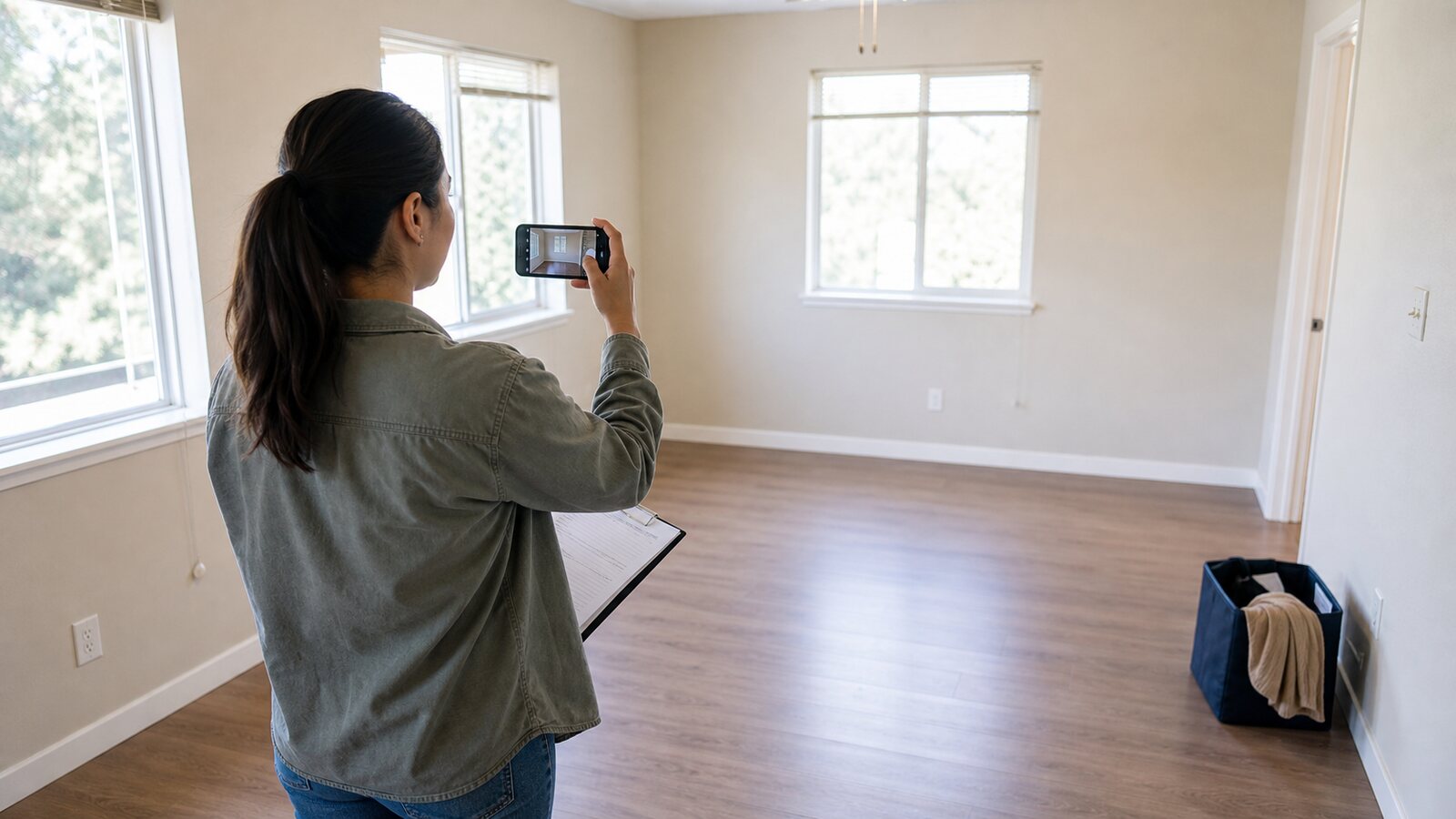
A tenant-centered inspection checklist for building a clear rental condition record.
Tenants should document, even when things seem fine
A rental inspection checklist for tenants is useful even in a clean, well-managed property. Good landlords can forget details too, and property managers may change during your lease.
Your inspection creates continuity. If there is a question later, you have a dated record instead of trying to reconstruct the beginning of the lease from memory.
Build your record around rooms
Room-first documentation is easier to follow than photo-first documentation. Open the kitchen, document the kitchen, then move to the bathroom, bedroom, living room, and other areas. Every note and photo should belong somewhere obvious.
A quick-photo feature can be useful, but the final record should still assign each photo to a room. Reports are stronger when they read like a walkthrough rather than a pile of images.
Include cleanliness, damage, and function
Condition is more than visible damage. Tenants should document whether appliances work, whether drains run, whether locks latch, whether windows open, whether lights work, and whether the property was clean at handoff.
If something is questionable, record it. You can always decide later whether it matters. You cannot easily recreate move-in condition after you have lived there for months.
Make sharing part of the process
An inspection that stays private on your phone is weaker than one you shared at the beginning. Send the report, save the sent message, and keep your files organized.
TenantCircle’s app mention belongs naturally here: it helps tenants create a report that is already organized by room and ready to share. The real win is not the app itself; it is the habit of creating a clear record before a dispute exists.
How to use this guide without overthinking it
Do the inspection in one pass, in daylight if possible, and keep your pace steady. Open the room, take the wide photos first, then move around the walls, fixtures, closets, flooring, windows, doors, and built-ins. If you see something that might matter later, document it in the moment instead of trying to decide whether it is “serious enough.” Small details are easier to ignore later than they are to recreate.
After you finish the rental inspection checklist for tenants, take ten minutes to review the record before sending it. Make sure every photo belongs to a room, every issue has a short location note, and the inspection date is obvious. Then share a copy with your landlord or property manager and keep proof that you sent it. This is the simple habit that turns a checklist into a useful security deposit record.
Rental inspection checklist for tenants: quick checklist
- Inspect room by room.
- Document clean areas, damaged areas, and function issues.
- Assign every photo to a room.
- Share the report early.
- Keep a copy through the deposit return period.
FAQ
Can a tenant do a rental inspection without the landlord?
Yes. A tenant can create their own dated inspection record and share it with the landlord or property manager.
Is room-first inspection better than photo-first?
Room-first inspection usually creates a cleaner report because photos and notes are automatically organized by area.
What if the landlord ignores my inspection?
Keep proof that you sent it. A dated, shared record can still be useful even without a response.
Should I document cleanliness at move-in?
Yes. Cleanliness can become part of deposit disputes, so document dirty appliances, bathrooms, floors, and cabinets.
Keep the record organized
Whether you use TenantCircle or your own folder system, the habit is the same: inspect early, organize by room, save the photos, and share a dated report while the condition is still fresh.
Request access