A documentation-first checklist for renters who want a stronger security deposit record.
Your deposit depends on the record, not just the truth
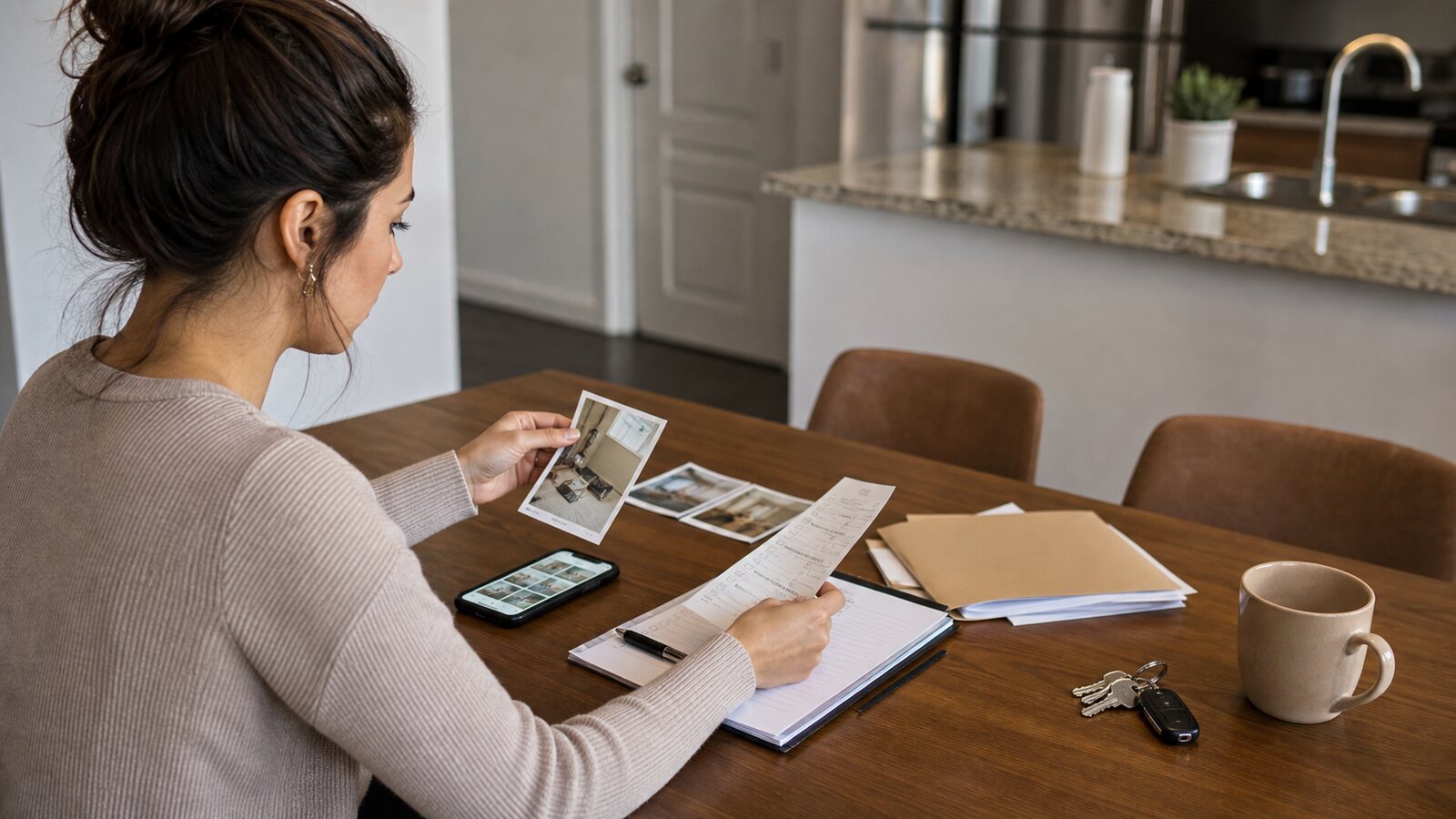
A security deposit inspection checklist helps renters document what they know to be true before the situation becomes a disagreement. You may be careful, clean, and responsible, but without evidence, deposit conversations can become frustrating quickly.
This is not legal advice, and deposit laws vary by state. But in practical terms, organized documentation gives you a better foundation for asking questions, responding to deductions, or escalating if needed.
Create two records: move-in and move-out
The strongest security deposit record has a beginning and an end. At move-in, document pre-existing condition. At move-out, document how you returned the property. The comparison is what gives the record weight.
If you only document at move-out, you can still show final condition. If you document both, you can show whether a disputed issue existed before your tenancy.
Add receipts and communication
Photos and notes are the core of the inspection, but receipts and messages help complete the story. Save receipts for cleaning, carpet cleaning, repairs, replacement bulbs, and any supplies required by your lease.
Also keep emails or messages where you reported problems, sent the move-in inspection, requested repairs, scheduled a walkthrough, returned keys, or provided a forwarding address.
Organize before there is a problem
The worst time to organize deposit evidence is after you receive a deduction notice. Build the folder early. Keep move-in photos, move-out photos, reports, receipts, and messages together.
TenantCircle helps renters do that by turning inspection photos and notes into a timestamped report. It should not replace reading your lease or understanding local rules, but it can make the documentation side much cleaner.
How to use this guide without overthinking it
Do the inspection in one pass, in daylight if possible, and keep your pace steady. Open the room, take the wide photos first, then move around the walls, fixtures, closets, flooring, windows, doors, and built-ins. If you see something that might matter later, document it in the moment instead of trying to decide whether it is “serious enough.” Small details are easier to ignore later than they are to recreate.
After you finish the security deposit inspection checklist, take ten minutes to review the record before sending it. Make sure every photo belongs to a room, every issue has a short location note, and the inspection date is obvious. Then share a copy with your landlord or property manager and keep proof that you sent it. This is the simple habit that turns a checklist into a useful security deposit record.
Security deposit inspection checklist: quick checklist
- Create move-in and move-out inspection records.
- Keep photos organized by room and date.
- Save cleaning and repair receipts.
- Save messages about repairs, inspections, and key return.
- Keep all records until the deposit is fully resolved.
FAQ
What is a security deposit inspection checklist?
It is a checklist renters use to document rental condition and supporting evidence that may matter if deposit deductions are disputed.
Can photos help with a security deposit dispute?
Yes. Photos are often helpful when they are dated, organized by room, and connected to move-in or move-out notes.
Should I save cleaning receipts?
Yes. Receipts can help show what work was completed before you returned the property.
Is this legal advice?
No. Deposit rules vary by state and situation. This checklist is practical documentation guidance, not legal advice.
Turn the walkthrough into an organized report
TenantCircle keeps room notes, photos, dates, and signatures together so the record is easier to review and share while the condition is still fresh.
View on the App Store See how the renter app works